Your auditors need to explain what they found, and the people responding need to understand what requires attention. We are developing Compliance to keep the requirement, evidence and corrective work together, from programme planning to a reviewed response.
The programme before the audit
Give your audit programme a useful focus.
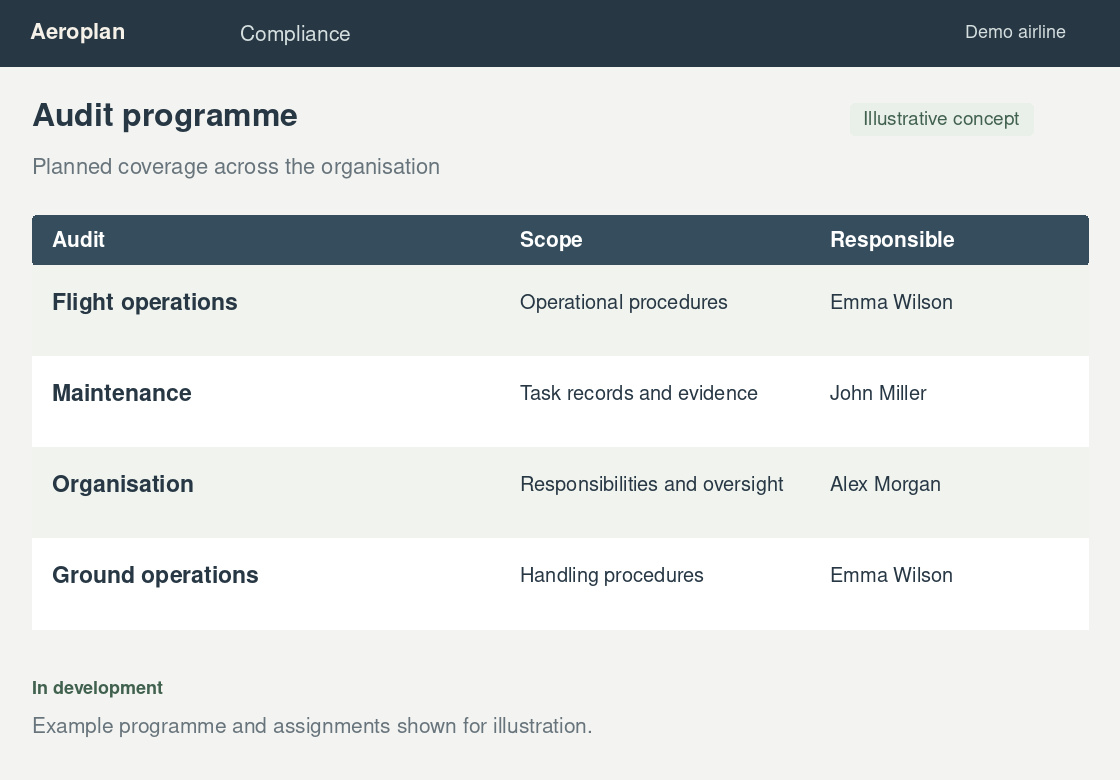
Your programme should help you see which activities need assessment before choosing audit dates. The planned coverage view will bring those activities and requirements together to support scheduling.
Flight operations
Check the procedures and responsibilities your crews work with.
Maintenance
Examine an inspection alongside the records it requires.
Organisation
Consider how responsibilities carry across your departments.
Planning
Turn the planned coverage into an audit schedule your team can work from.
The intended audit workspace
Help auditors prepare. Help auditees respond.
Your auditor needs a clear scope; the auditee needs to understand the finding. These concept views show how the planned programme and finding workspace would support each person’s work.
The programmePlanning and coverage
Give auditors a clear starting point.
The planned programme view would help your auditor identify the activities and coverage needed to prepare an assessment.
The findingResponse and review
Give the auditee an issue they can address.
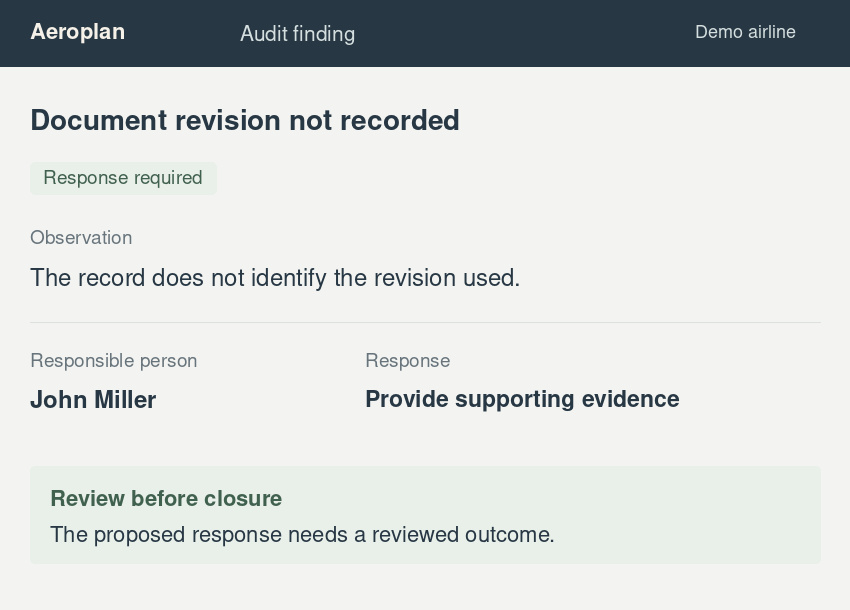
The planned finding view would give the assigned person the issue and a place to prepare a response for review.
The audit programme
Plan an audit around the work that matters.
Before a maintenance audit, your auditor needs to know which activity to examine and which requirements apply. Preparing that basis helps the team ask questions relevant to the operation.
We are designing Compliance to keep those questions and sources with the assessment. Your auditor should be able to explain observations against the requirements and work they examined.
During the audit
Help everyone understand what the audit found.
What is being assessed?
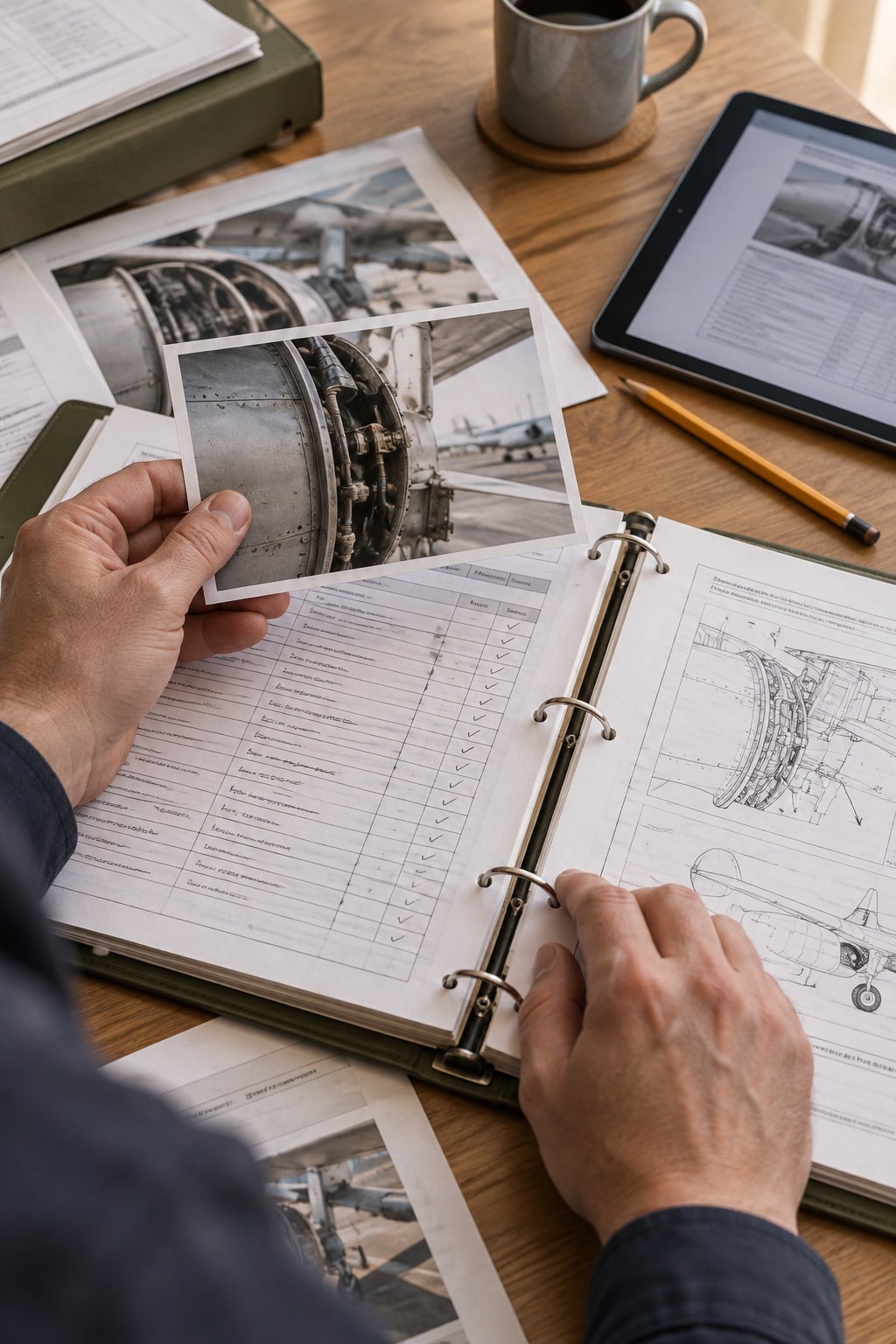
Your auditor needs to establish whether the inspection record required by a maintenance procedure is available.
What does the assessment show?
When the record cannot be produced, the planned workflow keeps the observation and evidence against the requirement. The person responding can see why the issue was raised.
Planned iPad support would give your auditor the assessment at hand while examining the work and recording observations.
A missing inspection record
Give an auditee a clear issue to address.
A maintenance audit identifies a required record that cannot be produced. In the planned workflow, the observation stays with its requirement and evidence so the auditee can understand the finding.
Identify the record the procedure requires.
Maintenance procedure - Illustrative audit
Establish what the audit requires
Your auditor examines the maintenance procedure and its inspection-record requirement.
Audit scope agreed
Identify the record the procedure requires.
Maintenance procedure - Illustrative audit
Establish what the audit requires
Your auditor examines the maintenance procedure and its inspection-record requirement.
Audit scope agreed
Describe the missing record and retain the evidence.
Maintenance procedure - Illustrative audit
Make the observation understandable
The missing record is described against the requirement, with supporting evidence for the person responding.
Observation with evidence
Give the assigned person a clear basis for a response.
Maintenance procedure - Illustrative audit
Give the response a responsible owner
The planned workflow gives the assigned person the basis they need to coordinate corrective work.
Owner and response
A missing inspection record
Give an auditee a clear issue to address.
Requirement
Establish what the audit requires
Your auditor examines the maintenance procedure and its inspection-record requirement.
Evidence
Make the observation understandable
The missing record is described against the requirement, with supporting evidence for the person responding.
Response
Give the response a responsible owner
The planned workflow gives the assigned person the basis they need to coordinate corrective work.
After the audit
Make findings easier to act on and review.
The person addressing a finding needs more than its title. We intend to give them the observation, requirement and evidence together, so they can understand what needs attention before preparing a response.
Keeping the submitted response and review decision with the finding would help your team explain how it was resolved when the next audit comes around.
Corrective work and closure
Give the closure decision something to stand on.
A finding is useful when your team can address it and explain the outcome. The intended workflow keeps the corrective response and the reviewer’s decision with the original issue.
Assign
Help the owner understand the issue
The responsible person should see the observation, requirement and evidence before coordinating the response.
Respond
Show the work behind the response
The auditee would describe how the finding was addressed and provide supporting information, such as the inspection record or evidence of corrective work.
Review
Keep the review decision available
The reviewer would compare the response with the finding and record whether it supports closure or needs further explanation.
Across your organisation
Give auditors the sources they need.
An auditor preparing an assessment can consult the legislation in Regulations and the procedure in Manuals. Relevant Safety information can help explain the operational circumstances. The intended Compliance workflow keeps audit decisions separate from the decisions in a Safety Case.
Bring an example from your audit programme. We can discuss how the planned Compliance workflow would support your auditors and auditees, and agree which requirements matter for your organisation.